FUE vs FUT Hair Transplant: Which Technique Actually Suits Indian Hair Loss
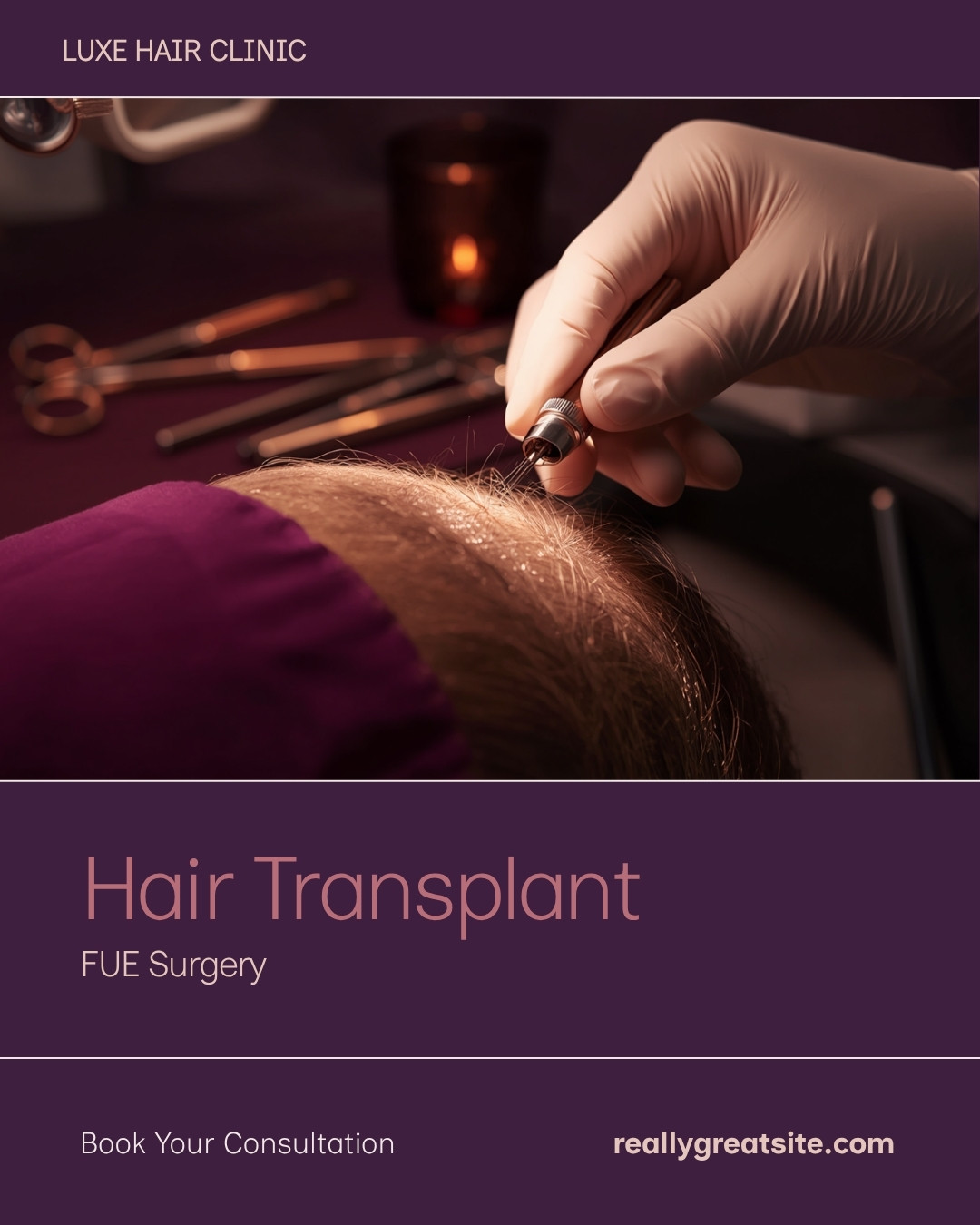
Most clinics in Bhubaneswar will quietly steer every patient towards FUE. The pitch is that it is the newer, scarless, painless option. Some of that is true. Some of it is marketing. For an Indian patient with Norwood 5 hair loss, dense donor coverage, and a job that lets them grow their hair to grade 4 or longer, the older FUT technique can deliver a denser, longer-lasting result at a lower cost. The choice between the two is not about which is modern. It is about your scalp, your hair loss pattern, and the result you want at year ten, not year one.
A short, accurate description of each technique
In Follicular Unit Extraction (FUE), the surgeon and team use a small punch, typically between 0.8 mm and 1.0 mm, to remove one follicular unit at a time from the donor zone at the back and sides of the scalp. Each graft is harvested individually, kept in a holding solution, and then implanted into pre-made recipient sites or placed using an implanter pen. There is no linear cut. The donor zone heals as a scattered field of tiny dot scars that are invisible at hair lengths above grade 2.
In Follicular Unit Transplantation (FUT), also called the strip method, the surgeon removes a single strip of scalp tissue from the safe donor zone. That strip is then dissected under microscopes into individual follicular units of one, two, three, or four hairs each. The wound is closed with sutures or staples and heals as a linear scar across the back of the head. The grafts are then implanted the same way they are in FUE.
The harvesting differs. The implantation does not. A graft is a graft.
The four factors that actually decide which is right for you
1. Total grafts needed in one session
A single FUE session in a competent Bhubaneswar clinic typically harvests 2,500 to 3,500 grafts safely without depleting donor density in a visible way. Pushing beyond 3,500 in one go often shows up later as a thinned, moth-eaten look at the back of the scalp once the rest of the head ages. FUT, in contrast, can yield 3,500 to 4,500 grafts in a single strip session without the same risk to visible donor density, because the strip is taken from the densest band and the surrounding scalp is mobilised over the closure.
For Norwood 2 and 3 patients needing 1,500 to 2,500 grafts, FUE is almost always the right call. For Norwood 5 and 6 patients needing 3,500 grafts or more, FUT is often the cleaner long-term answer, sometimes combined with FUE in a later top-up.
2. Donor density and the long-term scalp picture
Indian patients typically have a donor density of 55 to 75 follicular units per square centimetre in the safe zone, according to baseline data published in the [Indian Journal of Dermatology](https://www.e-ijd.org/). FUE harvests from a wide area to avoid leaving visible thin patches, which means about 25 to 30 per cent of the available donor follicles in a given zone get removed even in a well-planned session. FUT removes a strip from the densest part of the safe zone, leaving the rest untouched. Ten years later, the patient who had FUT may have more usable donor follicles remaining for a top-up procedure than the patient who had two large FUE sessions on the same head.
This is rarely discussed in marketing material. It is one of the most important factors for younger patients in their late twenties who may need more work later in life.
3. The scar question, told honestly
FUE leaves dot scars across the donor zone. At grade 2 hair length and above, they are not visible to a normal observer. At a clean shave or grade 1, a trained eye can spot them. FUT leaves a linear scar running roughly ear to ear at the back of the head, behind the occipital protuberance. With a competent trichophytic closure, the scar can be 1 to 2 mm wide and hair grows through it, making it almost invisible at grade 3 or longer.
So the honest framing is this. FUE wins for patients who want to keep their hair very short long-term. FUT is fine for everyone else. The "no scar" claim for FUE is technically inaccurate. There are many tiny scars; they are just distributed rather than linear.
4. Cost in Bhubaneswar, 2026
In Bhubaneswar, FUT typically runs 20 to 30 per cent cheaper per graft than FUE, because the harvesting is faster. Realistic 2026 ranges:
For a 4,000-graft Norwood 5 case, FUT can be ₹40,000 to ₹60,000 cheaper than FUE for an equivalent technical quality. That is not a small difference.
What Indian hair behaves like under each technique
Indian hair is generally medium to coarse calibre, dark in pigment, and varies between straight and gentle wave. This matters for two reasons.
Punch size in FUE. A 0.9 mm punch on coarse Indian follicles is forgiving. A 0.7 mm punch, which is often marketed as more refined, can transect follicles in coarse hair and reduce graft survival. Bhubaneswar clinics that publish their punch protocols and tailor punch size to hair calibre tend to have better long-term graft survival. Ask about it. Microscope dissection in FUT. Indian hair is well-suited to clean dissection under stereo microscopes because the contrast between follicle and surrounding tissue is high. A good FUT team in Bhubaneswar dissects each strip with three or four technicians at microscopes and the graft survival rate is comparable to careful FUE.The [American Academy of Dermatology](https://www.aad.org/public/diseases/hair-loss/treatment/hair-transplant-faq) notes that graft survival in well-executed FUT and FUE is statistically equivalent. The difference is in donor management, not in the planted result.
When FUE is genuinely the right answer
Most patients walking into Ashu Skin Care from the Infocity IT corridor in this age range fit this profile, and FUE is what we recommend.
When FUT is genuinely the right answer
A surprising number of patients in their late thirties and early forties who come in convinced they want FUE turn out to be better candidates for FUT after a proper donor assessment.
The combined approach
Some advanced Norwood cases benefit from a primary FUT session of 3,800 to 4,500 grafts for the front and mid-scalp, followed twelve months later by a smaller FUE top-up for the crown. This preserves donor density better than two large FUE sessions and gives the surgeon room to refine density where it matters most. [DermNet NZ has a short overview of the combined approach in their hair transplant article.](https://dermnetnz.org/topics/hair-transplant)
The cost of a combined approach is roughly comparable to one large all-FUE case, but the donor-zone picture at year ten is meaningfully better.
Recovery, day by day, for each technique
FUE recovery in Bhubaneswar. Scab formation on the donor and recipient sites for seven to ten days. First wash from day three on a careful protocol. Soft cap or hat outdoors. No helmet for fourteen days, which matters if you commute on a two-wheeler from Patia or Khandagiri. Return to office work day four or five for most patients. Strenuous exercise from week three. FUT recovery in Bhubaneswar. Sutures or staples at the back of the head for ten to twelve days. A small dressing strip is worn for the first three days. Sleep on a travel pillow to keep pressure off the closure. Wash protocol begins day three or four. Return to office work day five or six. Strenuous exercise from week three to four. Suture removal at the clinic on day ten to twelve. The linear scar matures and softens over six months and is usually well-hidden under hair by month three.In Bhubaneswar's humidity, FUT patients need to keep the closure dry for the first seventy-two hours, which is more nuanced in monsoon season. The clinic should brief you on this.
What we tell patients at Ashu Skin Care
Dr. Anita Rath plans technique selection at the consult after looking at four things: your Norwood stage, your donor density on a measured assessment, your long-term hair length preference, and any future hair work you may need ten years from now. Roughly two-thirds of patients walk out planning FUE. About a quarter end up choosing FUT after the conversation, and a small number end up with a combined plan. We do not market one technique over the other. The choice is clinical, not commercial.
If you want a real recommendation, bring photos of the back and crown taken under bright light, and we can have an honest conversation about which technique your scalp actually supports.
Frequently Asked Questions
Is FUE more painful than FUT?
No. Both are done under local anaesthesia and most patients describe the experience as boring rather than painful. The donor area is numbed thoroughly for both. The difference is in recovery. FUE produces mild soreness at hundreds of small puncture points for a few days. FUT produces a tighter feeling at the suture line for the first week. Neither requires opioid pain management in a normal case.
Will FUT leave a visible scar?
A standard FUT closure leaves a linear scar 1 to 3 mm wide. With a trichophytic closure technique, hair grows through and around the scar, making it almost invisible at grade 3 or longer hair lengths. The scar is fully behind the head, runs roughly ear to ear at the level of the occipital protuberance, and is not visible from the front, side, or above when hair is at moderate length. It becomes a concern only if you decide to shave your head later.
Can I do FUE after FUT, or FUT after FUE?
Yes to both, though most surgeons prefer to do FUT first if the patient is a candidate for both, because the strip preserves more total donor follicles for later FUE work. Doing large FUE first reduces overall donor density distribution, which can compromise the success of a later FUT.
Is FUE always better because it is newer?
No. FUE is newer in the sense that it became mainstream in the 2000s, while FUT was the gold standard before that. Both techniques have evolved. Modern microscope-assisted FUT with trichophytic closure delivers graft survival comparable to careful FUE. Newer is not automatically better in transplant surgery. The right answer depends on the scalp in front of the surgeon.
How do I know which technique my donor zone supports?
A proper donor assessment includes measuring follicular unit density in the safe zone, evaluating skin laxity at the back of the head (FUT needs reasonable laxity for clean closure), and estimating total donor reserve. This takes a clinical examination, not a phone consult. A clinic that quotes a technique without examining your scalp should be approached carefully.
Are graft survival rates the same?
In well-executed cases, yes. Published comparative studies in the [Indian Journal of Dermatology, Venereology and Leprology](https://ijdvl.com/) and meta-analyses on [PubMed](https://pubmed.ncbi.nlm.nih.gov/) show graft survival in the 85 to 95 per cent range for both techniques when performed by experienced teams. The variation between surgeons is larger than the variation between techniques.