Ingrown Hair Treatment in Bhubaneswar: Causes, Prevention, and Laser Solutions
Key takeaways
- Ingrown hairs occur when hair curls back or grows sideways into the skin, causing inflamed bumps, itching, and dark post-inflammatory marks.
- Frequent shaving, waxing, and tight clothing create sharp hair tips that easily pierce surrounding follicle walls in humid weather.
- Gentle exfoliation with salicylic or glycolic acid helps clear surface dead skin cells, preventing new hairs from becoming trapped.
- Dermatologist-administered laser hair reduction is the most effective long-term solution, destroying active hair roots to permanently stop ingrown bumps.
Why do ingrown hairs and razor bumps form?
Ingrown hairs form when a shaved or waxed hair curls backward and re-enters the skin tissue, or gets trapped under dead skin cells, causing foreign-body inflammation known as pseudofolliculitis.
When you shave against the grain or pull hair out during waxing, the remaining hair tip inside the follicle becomes sharp. As it grows, this sharpened tip can slice into the follicle wall rather than exiting smoothly through the skin pore.
In humid climates like Bhubaneswar, sweat and friction from synthetic clothing exacerbate follicle swelling, leading to painful red bumps, pustules, and dark pigmentation patches on legs, underarms, beard areas, and bikini lines.
How does laser treatment permanently fix ingrown hair?
Medical laser treatment targets melanin inside the hair bulb, emitting light energy that selectively destroys the hair follicle so coarse, sharp hair can no longer grow back to cause bumps.
Unlike temporary hair removal methods that leave hair roots intact, laser energy permanently thins and weakens follicle activity. By reducing overall hair density and softening coarseness, laser therapy stops the cycle of recurring pseudofolliculitis.
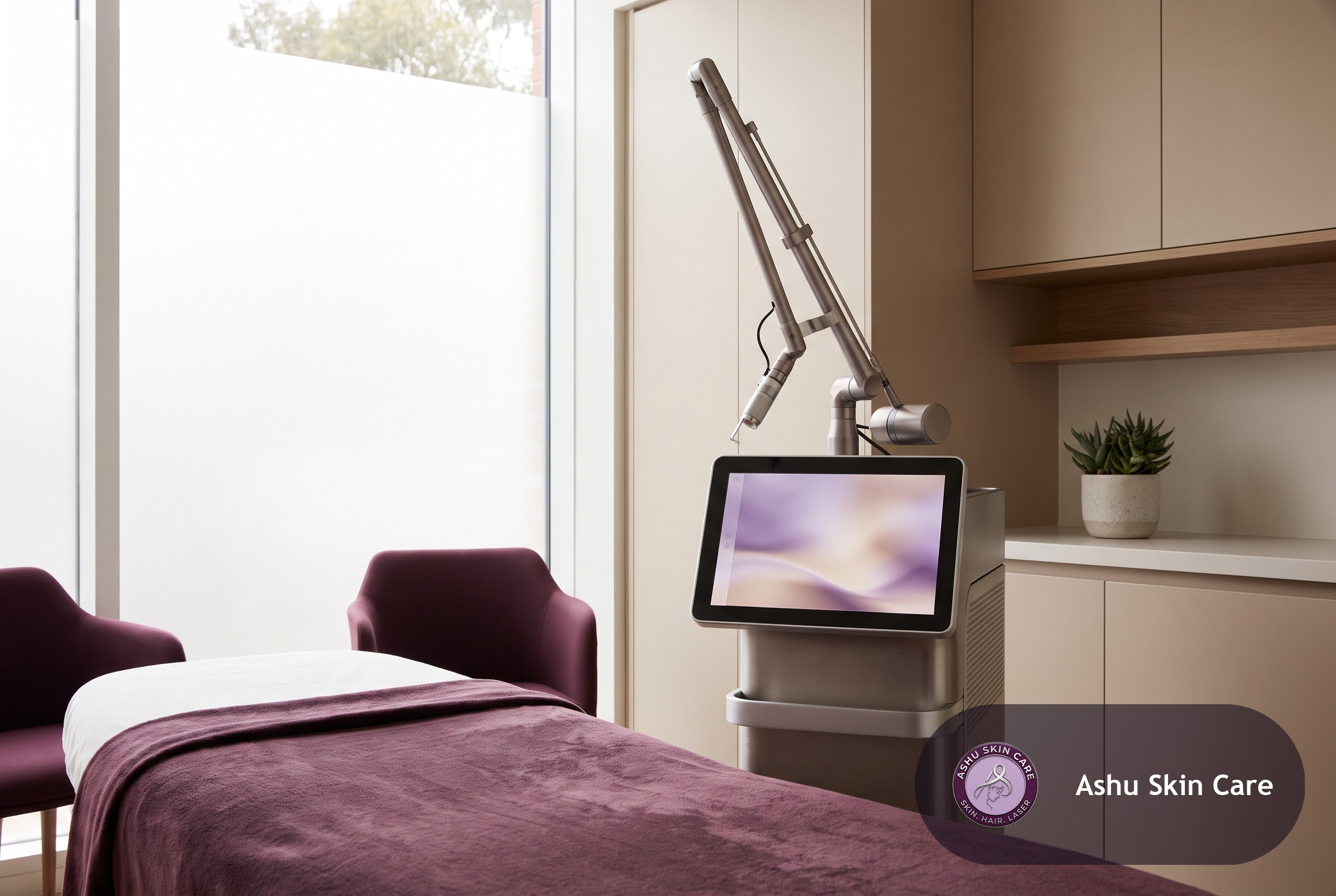
At Ashu Skin Care, our clinical dermatologists utilize advanced US-FDA approved laser technology calibrated for Indian skin tones, ensuring safe and comfortable treatments with minimal downtime.
| Method | Mechanism | Ingrown Prevention Level |
|---|---|---|
| Shaving / Waxing | Cuts hair at skin line or pulls root temporarily | Low (often triggers new bumps) |
| Chemical exfoliants | Dissolves surface keratin to unblock pores | Moderate (requires ongoing use) |
| Laser hair reduction | Destroys hair germ cells at root level | High (permanent reduction) |
To learn more about clinical pricing and session packages, read our detailed guide on laser hair removal cost in Bhubaneswar.
What topical treatments clear dark spots from ingrown hair?
Topical chemical exfoliants containing salicylic acid, glycolic acid, and dermatologist-prescribed depigmenting creams dissolve trapped dead skin and fade dark post-inflammatory spots.
Repeated razor bumps often leave behind stubborn hyperpigmentation marks. Professional chemical peeling procedures gently exfoliate dark epidermal layers while encouraging smooth cellular renewal.
How can you prevent razor bumps at home?
Prevent ingrown hair by shaving strictly in the direction of hair growth, using single-blade razors with moisturizing shaving gel, and exfoliating gently twice weekly.
- Shave with the grain. Always glide the razor blade in the natural direction of hair growth without pulling skin tight.
- Use warm water prep. Softening hair strands with warm water for 3 minutes before shaving reduces hair resistance and blade drag.
- Moisturize after hair removal. Apply a light, non-comedogenic aloe or ceramide moisturizer to soothe skin barrier irritation.
- Wear breathable fabrics. Choose loose cotton garments after shaving or waxing to prevent friction against sensitive skin.
Frequently asked questions
How many laser sessions are required to stop ingrown hair?
Most patients notice a significant reduction in ingrown hair bumps after just 2 to 3 laser sessions. A complete course of 6 to 8 sessions provides long-lasting hair reduction and smooth, bump-free skin.
Can laser hair removal be performed on tanned skin?
Yes, modern long-pulsed Nd:YAG laser technology safely treats dark or tanned Indian skin tones by targeting deep follicle melanin while preserving surface epidermal cells without risk of burning.
Do chemical peels help with ingrown hair marks?
Dermatologist-administered salicylic acid and glycolic acid peels effectively dissolve dead keratin, unblocking hair pores while fading dark post-inflammatory hyperpigmentation marks caused by older razor bumps.
The bottom line
Ingrown hair bumps and razor marks can be frustrating, but you do not have to live with painful recurring inflammation. Combining dermatologist-guided topical exfoliation with targeted laser hair reduction provides a permanent fix, giving you smooth, bump-free skin.
Sources
- Pseudofolliculitis barbae causes and treatments · American Academy of Dermatology
- Laser hair removal clinical overview · MedlinePlus, U.S. National Library of Medicine
This article is for education only and is not a substitute for medical advice. Consult a qualified dermatologist for diagnosis and treatment.